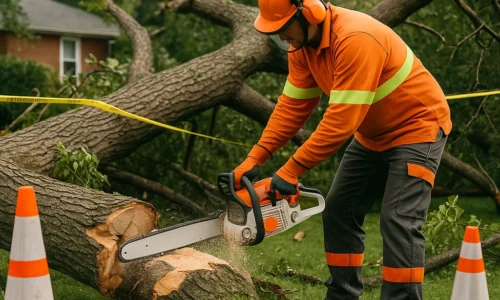
1. Sudden Leaning After a Storm
After heavy rain or strong winds, a tree that begins leaning noticeably is one of the clearest warning signs of structural instability.
- Symptom: Sudden lean or exposed roots
- Risk: Root plate failure and full collapse
- Action: Immediate professional assessment
A leaning tree near driveways, fences, or homes should never be ignored. The longer it remains unstable, the higher the chance of complete uprooting — particularly during the next storm front.
In these situations, urgent assessment through Emergency Tree Services Sydney is often required to stabilise or safely remove the tree before it falls.
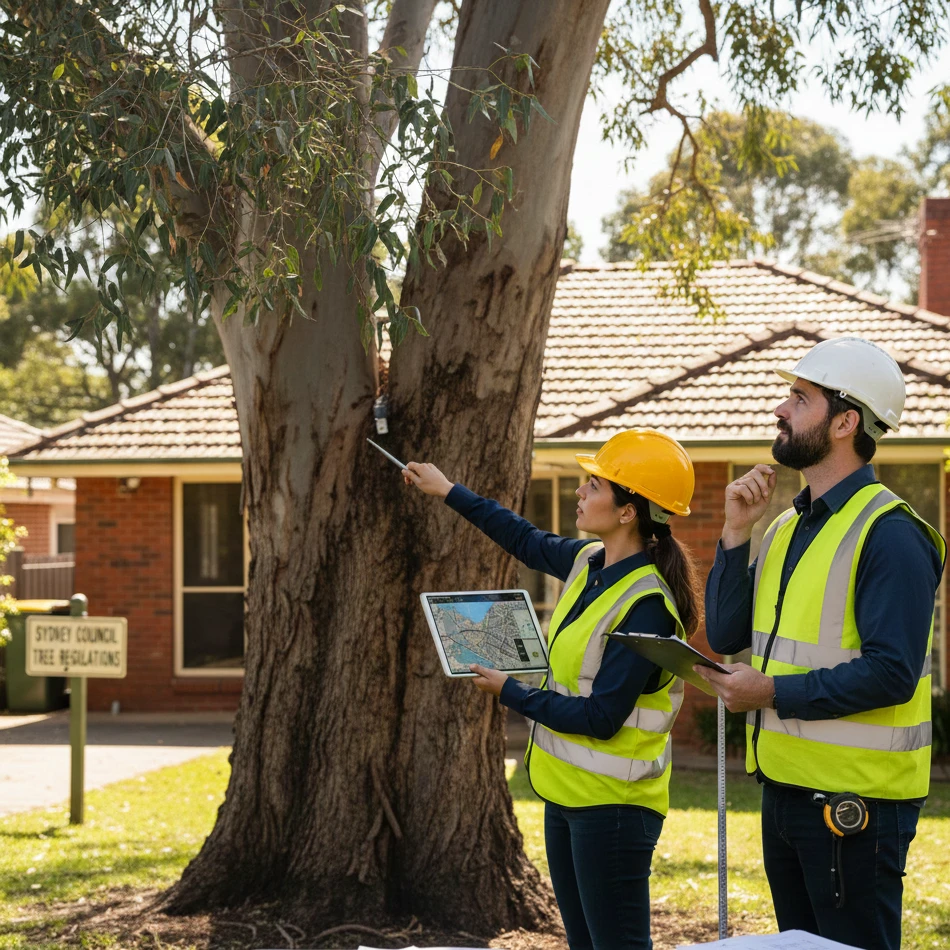
2. Large Hanging or Broken Branches
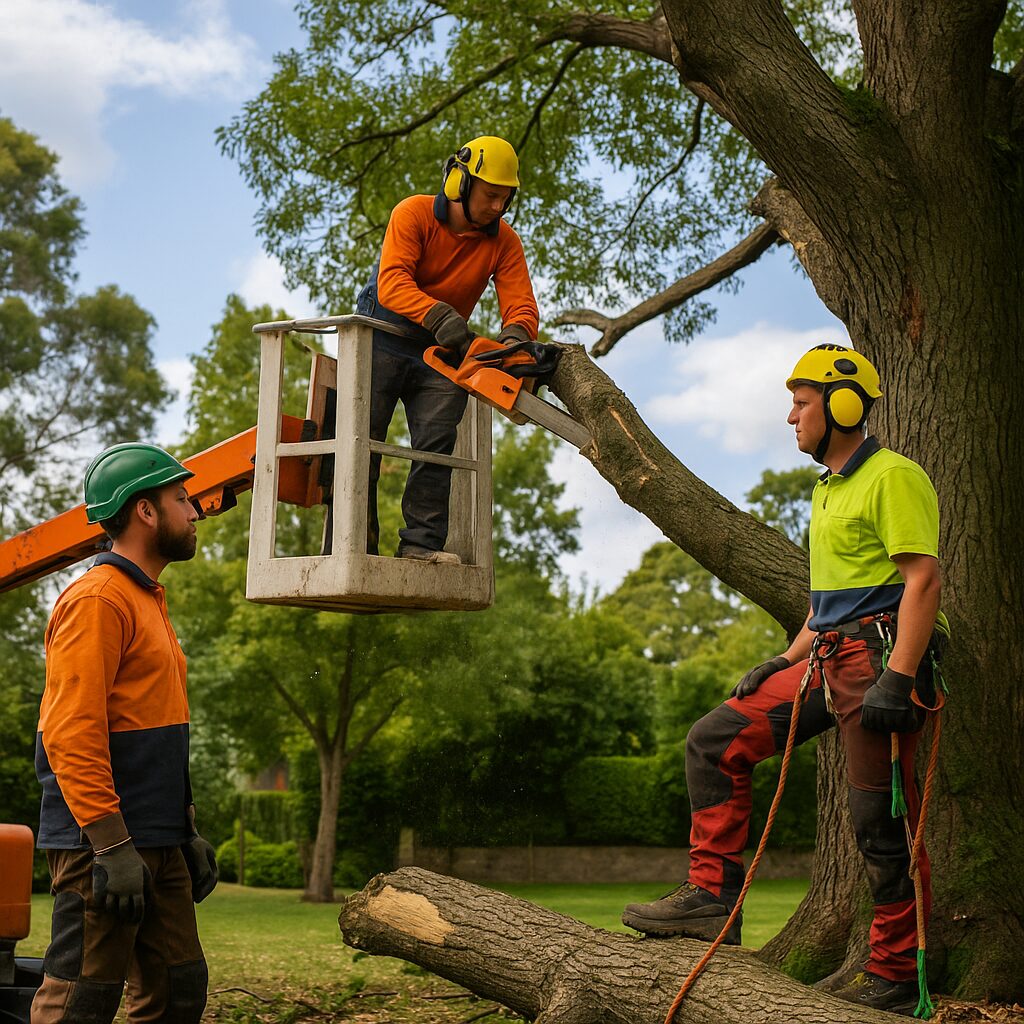
Broken limbs caught in the canopy are a serious hazard. They may remain suspended temporarily but can fall without warning.
Sydney properties often sit close to footpaths, parked vehicles, or neighbouring homes. A partially detached branch above these areas presents significant liability and safety risk.
Heavy limbs can also fall onto powerlines — increasing fire hazards and service disruptions during storm season.
If a branch is cracked, hanging, or torn from the trunk, it typically requires more than routine trimming. In many cases, partial dismantling or controlled removal under Tree Removal Sydney protocols is necessary to eliminate the hazard safely.
3. Cracks in the Trunk or Splitting Timber
Visible cracks running vertically along the trunk indicate structural stress. These fractures weaken the tree’s load-bearing capacity and often precede major failure.
When structural cracks are present, the tree may fail at the trunk rather than the roots. This type of break can be unpredictable and sudden.
If cracking is visible at ground level or around major branch unions, urgent inspection is warranted. Where structural integrity cannot be restored, removal under professional Tree Services Sydney may be the safest course of action.
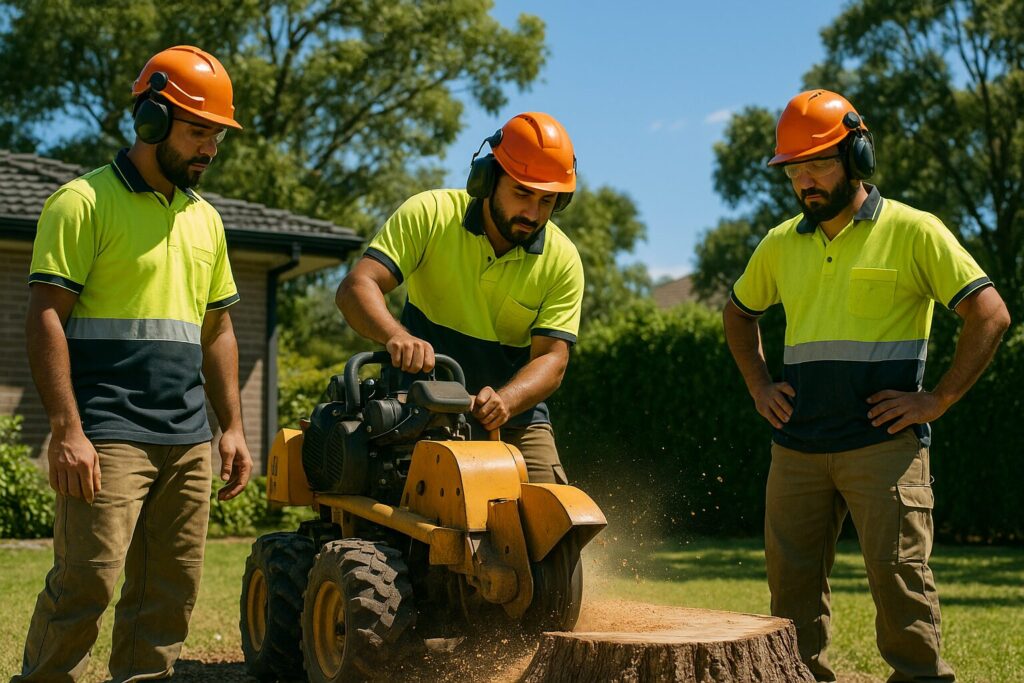
4. Fungal Growth at the Base
Fungal bodies (such as mushrooms) appearing near the base of a tree are often a sign of internal decay.
While not all fungi indicate severe problems, their presence can mean that the internal core of the tree is compromised. In emergency scenarios, decay reduces structural strength and increases collapse risk during high winds.
Sydney’s humid conditions can accelerate fungal development, especially in shaded residential yards.
If decay is advanced, removal may be required rather than pruning. A qualified assessment under Emergency Tree Services Sydney can determine whether the tree can be managed or needs full removal.
5. The Tree Is Interfering With Powerlines
Trees growing into overhead lines present immediate safety hazards.
In Sydney, many residential streets have low-hanging distribution lines. Trees that have grown too close can quickly shift from a maintenance issue to an emergency situation.
If a tree is entangled with lines or has already fallen across them, professional emergency response is critical. This is not a situation for general trimming — it requires controlled action under Emergency Tree Services Sydney.
What Happens During an Emergency Tree Removal?
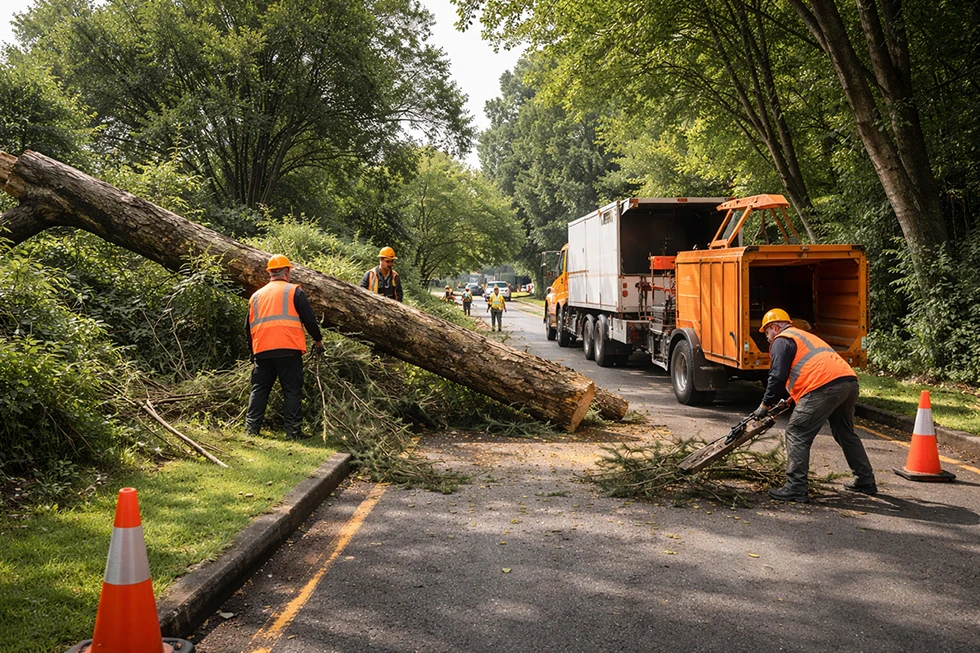
- Securing the immediate danger zone
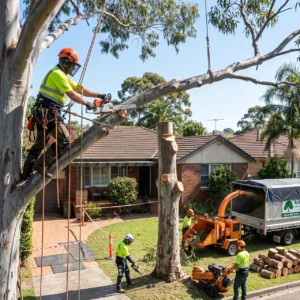
- Controlled dismantling of unstable sections
- Safe removal of hazardous material
- Clearing debris from affected areas
Why a qualified professional matters
Local Risks Specific to Sydney
Common Mistakes Property Owners Make
One common mistake is assuming a leaning tree will “settle back” once the soil dries. In most cases, once root structure is compromised, long-term stability is unlikely.
Some property owners also delay action because the tree “hasn’t fallen yet.” Unfortunately, emergency tree failures are rarely gradual.
Waiting often increases the risk of property damage and personal injury. If warning signs are visible, early engagement with Tree Removal Sydney professionals is usually safer than postponing action.